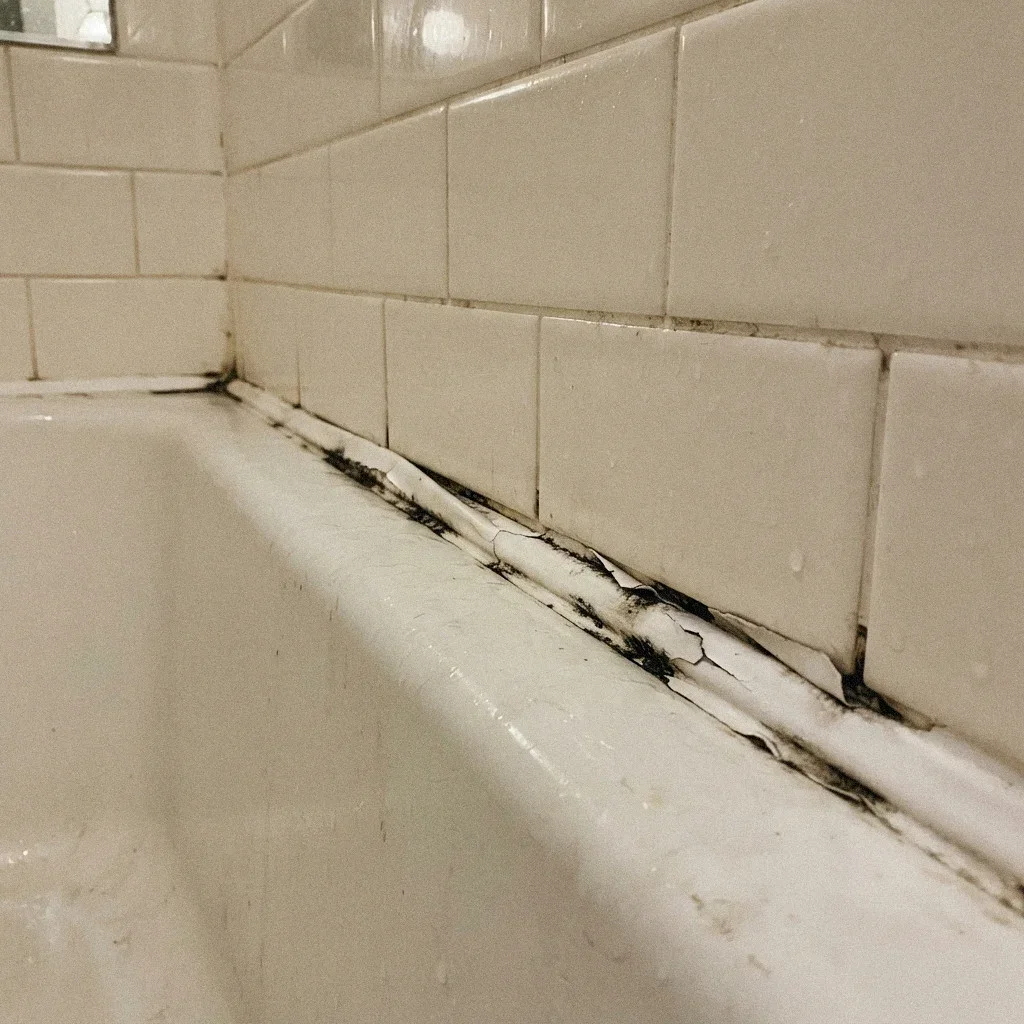
Moisture Is the Only Variable That Matters
Many houses in neighborhoods like Talmadge and Kensington still have their original water heater tucked into a garage corner or a small closet with no drain pan underneath. When the tank finally fails, the leak runs straight onto a slab or subfloor and sits there before anyone finds it.
San Diego's municipal water carries dissolved minerals that accelerate corrosion inside a tank over the years, and closets in older homes rarely have a floor drain. A tank near the end of its life can drip slowly for days, feeding mold in the wall or floor around it unnoticed.
Color does not identify a species, and a test is usually unnecessary once mold is already visible. What matters more is the moisture behind it: a leak, a condensation point, poor airflow in a room built decades before central air was standard. Fix that and the growth stops coming back. Clean it without fixing that and it returns, often in the same spot, within a season.
What's Actually Growing There
- Source
- Tanks typically fail at the seams or fittings, not all at once, so leaks often run for days before anyone notices the water.
- Behavior
- No drain pan under older tanks means a slow leak tracks straight into drywall, flooring, or the slab beneath it.
- Location
- A leak usually starts at the tank seams, the drain valve, or the fittings on the supply line, releasing water slowly rather than all at once.
- Common tank age
- Left alone, the leak keeps feeding the drywall, subfloor, or crawl space underneath, so the wet area spreads even though the puddle looks small.
- Source fix
- The tank has to be repaired or replaced and the supply line shut off before drying or cleaning the affected area is worth doing.
- Testing Need
- A water heater leak does not track with San Diego's weather the way a roof leak does. Tanks fail from age and mineral buildup year-round, so this cause shows up as often in a dry August as during the winter months when most of the region's rain falls.
- Follow-Up
- an estimated $450–$2800
What Waiting Costs
Homeowners often assume a dark patch near the water heater is soot from a nearby furnace pilot, or leftover grime from years of dust settling in the closet. Both are dry and stay put. Mold from a leak spreads outward from the base of the tank and darkens over weeks. Touch matters here. Soot and dust wipe away with a dry cloth and do not come back. Mold from a tank leak is often slightly raised, smears when wiped, and reappears within days because the water heater is still leaking behind or beneath it.
How the Job Actually Gets Done
A licensed plumber isolates the water heater at its shutoff valve, drains the tank, and replaces the unit or the failed fitting, whether that is a corroded nipple, a cracked supply line, or a seam in an old cast iron pipe run feeding the closet.
Once the new tank or fitting is in and the area has stayed dry for a few days, any drywall, baseboard, or flooring that absorbed water gets checked. Material that stayed wet for more than a day or two usually needs to come out rather than dry in place.
Bleach changes the color you are looking at, not the colony underneath it. It kills what the wipe touches and leaves roots in the material behind. If the wall board or the framing stayed damp, the same patch returns in weeks, which is why the fix has to start with the water source, not the stain.
A LICENSED PRO VERSUS A GENERAL HANDYMAN FOR THIS JOB
| What you have found |
The usual recommendation |
|---|
| Growth does not wait for a season here, since the marine layer keeps interior air damp through months when no rain falls at all. A house can pick up mold in the driest stretch of summer if a surface stays cool enough for condensation to form and linger. | Mold needs moisture more than it needs anything else. Organic material to feed on is already present in nearly any building material, so the question worth asking is not whether mold could grow but where the water or the humid air is getting in. A quote that skips that question is pricing half the job. |
| Color does not identify a species, and it never told anyone whether a patch is dangerous. Black, green and white growth can be the same organism reacting to different surfaces. A lab can name what is growing; it cannot say whether that name matters more than finding and stopping the water feeding it. | Mold needs moisture, not rain. In San Diego, marine humidity meeting a cool wall or window does the work a storm would do elsewhere, so a house can grow mold through a dry summer. Color does not tell you the species, and no test proves the air is safe. Find the water source before anyone starts cleaning. |
| A dark patch on drywall is a symptom, not the diagnosis. Every case traces back to a specific source: condensate off a cooling coil, a slow roof flashing leak, a bathroom fan venting into an attic instead of outside. Fix the surface without finding that source and the same patch returns within a season, often larger. | Mold needs moisture, not rain. San Diego's marine air meets a cool interior surface, an air conditioner drips condensate, a slow leak runs unnoticed because there's no wet season to expose it. No color identifies a species, no test proves the air is safe, and bleach only bleaches. The licensed pros we connect you with start by finding the water, not the stain. |
The Moisture Problem DIY Skips Past
Shutting off the water and power to a leaking tank is reasonable for anyone to do. Diagnosing whether the leak is the tank, a fitting, or a supply line, and replacing it, is plumbing work. Wiping visible mold without fixing the leak just delays the same patch coming back.
What It Means for the People Inside
A water heater tank corrodes from the inside, or a fitting on the supply line loosens, and it drips onto flooring or a slab for days before anyone notices. It gets mistaken for old water staining, but a water heater failure keeps feeding moisture. Common in older San Diego homes from Kensington to Clairemont. A licensed plumber replaces the tank or fitting before any mold cleanup is worth doing.
Not Sure Where The Moisture Is Coming From?
Expect an estimated $450 to $2800 for water heater leak here, with size and how far it has spread doing most of the moving. What moves the price on this page is almost never the mold itself — it is what the water reached and how much of it has to come out. Surface growth on tile or paint in a well-ventilated bathroom is the cheap end. The same size patch on drywall with insulation behind it is a different job, because porous material is removed rather than cleaned and the area has to be contained while that happens. Get the cause identified before you compare two quotes, or you are comparing two different scopes. pricing guide, and the service that handles this is Moisture Source & Leak Detection.
A water heater leak causes mold when a failing tank or fitting drips onto drywall, flooring, or a slab for days or weeks before anyone notices. Homeowners in North Park and Talmadge often mistake early staining for something else. Fix the leak first; cleaning mold on an active leak only masks the growth until the tank or supply line is properly repaired or replaced.