What That Smell or Stain Means in San Diego
A smell in a closed-up room, a dark ring under a window in Clairemont, paint lifting off a bathroom wall in North Park — these are recognition, not diagnosis. San Diego mold rarely follows a storm. It follows condensation on cool glass, a slow leak, an AC line draining where it should not, quietly, across a summer with no rain at all.
Most people do not know what caused the mold, they know what they found. A dark patch in a corner, a smell in a closet that soap does not shift, a floorboard that has started to cup. This page starts from what you noticed and points at the likely cause, so you can read about the right thing rather than guessing. If two answers look plausible, that is normal, and it is exactly what a free assessment settles.
What you noticed points to a cause, and the cause is what a quote should be built on. A stain near Mission Valley's damp lowlands reads differently than one in a 1960s Serra Mesa tract home. Pick the description below that matches what is in front of you, and read what usually sits behind it before anyone touches the wall.
Signs worth booking an inspection for
Not an emergency, and not something to leave until next season either.
| What you noticed | What it usually means | How soon it matters | Read more |
|---|---|---|---|
| Musty smell in one room | A musty odor with no visible stain often means hidden moisture: a slow leak inside a wall, condensation pooling on a single-glazed aluminum window frame, or an AC condensate line backing up above a ceiling. Check under sinks, along exterior walls, and near supply registers. If the smell is confined to one room, that room is where the water is entering. | Moderate. A smell alone does not mean heavy growth, but it means active moisture, and moisture left alone spreads. Check for a warped floor, bubbling paint or a soft patch of drywall nearby. If you find one, treat this as the same job as that visible sign, not a separate, milder one. | Plumbing leak behind a wall |
| Bathroom ceiling that never dries | A ceiling that stays damp signals a source feeding it faster than San Diego air can dry it: a bathroom fan missing or venting into the attic instead of outside, a slow leak from a flat roof above, or condensation off a poorly insulated line. Discoloration or bubbling paint often follows. Rule out efflorescence and old water staining before assuming active growth, then trace the moisture before touching the surface. | Moderate, moving toward urgent the longer it sits. A ceiling that will not dry is feeding growth continuously, not once. It will not resolve on its own, and painting over it hides the stain without stopping the source. Get the moisture source identified within days, not months, particularly in older Clairemont or North Park bungalows with undersized or absent bath ventilation. | Ask on the call |
| Wallpaper lifting at a seam | Wallpaper lifting at a seam means moisture is getting behind the paper, softening the paste. In San Diego that is often condensation off a single-glazed aluminum window nearby, or a slow leak inside the wall. Check for a musty odor or soft drywall under the seam. If the wall stays damp to the touch, treat it as an active leak, not a paper problem, and look at what feeds it before repapering. | Moderate. A lifted seam alone will not spread mold fast, but paper traps moisture against drywall, and growth can start behind it unseen. Do not just re-glue the seam. Find the water source first. If the area is spreading, feels damp weeks after any rain, or smells musty, treat it as a wall moisture issue worth tracing before it reaches studs. | Plumbing leak behind a wall |
| Paint bubbling or peeling on one wall | Bubbling or peeling paint on one wall, without a matching spot on the ceiling, usually means moisture is moving through the wall itself rather than falling from above. In older San Diego bungalows and tract homes across North Park or Clairemont, that often traces to a plumbing leak inside the wall, condensation from a single-glazed aluminum window, or grade outside pushing water in. Peeling alone does not confirm mold is present. | Moderate. Paint failure like this can sit for weeks before drywall softens, but it will not fix itself, and the wall behind it stays wet the whole time. Worth checking soon, not an emergency call tonight. If the drywall feels soft or spongy to the touch, or a musty odor comes with it, move it up to urgent. | Ask on the call |
| Stain that returns after painting | Paint hides a stain once, but if the water source stays active the discoloration bleeds back through in weeks. This is not a paint failure; it means moisture is still reaching that ceiling or wall in San Diego, often from a flat roof, an AC condensate line, or plumbing behind the surface. Painting over it again just repeats the cycle. The fix starts with finding and stopping the water, not another coat. | Moderate: not an emergency, but do not repaint a third time. A returning stain means an active moisture path behind drywall that painting cannot reach. Left alone through another season of marine humidity, it can spread, soften the wallboard, and turn a cosmetic fix into a repair job. Track down the source before the next coat goes on. | Roof leak |
| Cool damp patch on a wall | A cool, damp patch on drywall usually means moisture is condensing or wicking through from behind — often a slow leak, poor insulation, or a cold surface meeting humid indoor air, common near single-glazed aluminum windows in older San Diego homes. Left alone, it feeds growth behind the wall. Don't confuse it with efflorescence, a dry, chalky mineral crust with no dampness. Check within a few days; find the moisture source before anyone treats the wall. | Moderate. It is not an emergency, but the patch will spread and support growth behind drywall if the moisture source keeps feeding it. Look at it within a few days, especially in older San Diego homes near Ocean Beach, North Park or Golden Hill where original plumbing and single-glazed windows are still common. | Slab leak |
| Warped or cupped floorboards | Warped or cupped floorboards mean water has reached the wood from below or from a spill left too long, and the boards are swelling unevenly. It usually points to slab moisture, a plumbing leak, or damp carpet nearby rather than airborne humidity. Check under the flooring before assuming the surface finish is the problem. | Moderate. Warped floorboards are not an emergency the way standing water is, but wood that stays wet invites growth underneath where nobody can see it. Have the source found within a few days, not months. It is not the same as normal wood aging or a house settling, so do not wait on it. | Ask on the call |
| Musty smell from air vents | A musty smell from air vents usually means the HVAC system, not the room, is the source — often a coil or drain pan holding moisture inside the air handler, or a duct running through a damp crawl space. It rarely means anything about the vent grille itself. Have the licensed pros trace it to the unit before treating any wall or ceiling nearby. | Moderate. It will not resolve on its own, since the moisture source is inside a system that keeps recirculating air over it, but it rarely means immediate structural risk. Worth a look within days rather than months, especially before running the system heavily. This is different from a visible water stain or bubbling paint, which points to a leak instead. | Air conditioning condensate overflow |
| Water stain on a ceiling | A water stain on a ceiling means water has crossed the drywall from above, not that mold is present yet. In San Diego's flat-roofed mid-century and modern houses, a slow leak or a blocked AC condensate line can travel along framing before it ever shows. Check for bubbling paint or soft drywall nearby, then find the source before touching the stain. | Moderate, moving to urgent if the stain is spreading, the drywall feels soft, or a musty odor has joined it. A dry, static ring left from an old roof repair can wait. A fresh brown ring with sagging or bubbling paint means active water and should be traced within days, not weeks. | Roof leak |
| Damp smell under the floor | A musty odor rising through the floor usually means moisture is sitting in the crawl space below, not on top of the flooring. Bare soil under raised-floor homes in Golden Hill, South Park and Ocean Beach releases moisture continuously, and without a vapor barrier the joists and subfloor stay damp enough to grow mold out of sight. It is not efflorescence, which is a dry white mineral crust, not a smell. Have the crawl space checked before touching the floor above. | Moderate. Nothing is failing today, but a crawl space that stays damp will keep feeding growth into the subfloor and framing above it, eventually reaching warped flooring or a buckled floor. It does not need an emergency call tonight. It does need a look within the next week or two, before soft drywall or swollen baseboards show up in the room above. | Crawl space ground moisture |
| Cough that clears when you leave the house | A cough that clears once you leave the house points at indoor air, not a cold. Mold and mildew are common causes, though not the only ones. It is not a diagnosis. If the cough returns each time you're back inside, check for musty odor, water stains, or condensation on single-glazed windows, common in older Point Loma and North Park homes, and have the source looked at rather than just the symptom. | Worth checking soon, not an emergency. If the cough lines up with time spent near a specific room, check that room for a ceiling stain, bubbling paint, or condensation on a window sill first. Homes with flat roofs or crawl spaces, common across older San Diego neighborhoods like North Park or Golden Hill, are worth a closer look. | Marine layer humidity |
| Higher than usual humidity reading | A higher than usual humidity reading means the air is holding more moisture than the house can dry out on its own, often marine layer fog working into rooms with little airflow. It does not diagnose mold by itself, but sustained high humidity is what turns condensation on a window sill into a musty odor and eventually bubbling paint. Track the reading over a few days and check the likely mold causes page. | Moderate. A high reading by itself is not an emergency, but sustained humidity above 60 percent lets condensation form on single-glazed aluminum windows and cool wall surfaces, feeding the same growth as a leak would. Worth tracking over a few days before assuming a hidden water source; if the number keeps climbing, treat it as a ventilation or moisture problem, not a curiosity. | Marine layer humidity |
Signs to keep an eye on
Not damaging yet. Worth understanding before you spend money on it.
| What you noticed | What it usually means | How soon it matters | Read more |
|---|---|---|---|
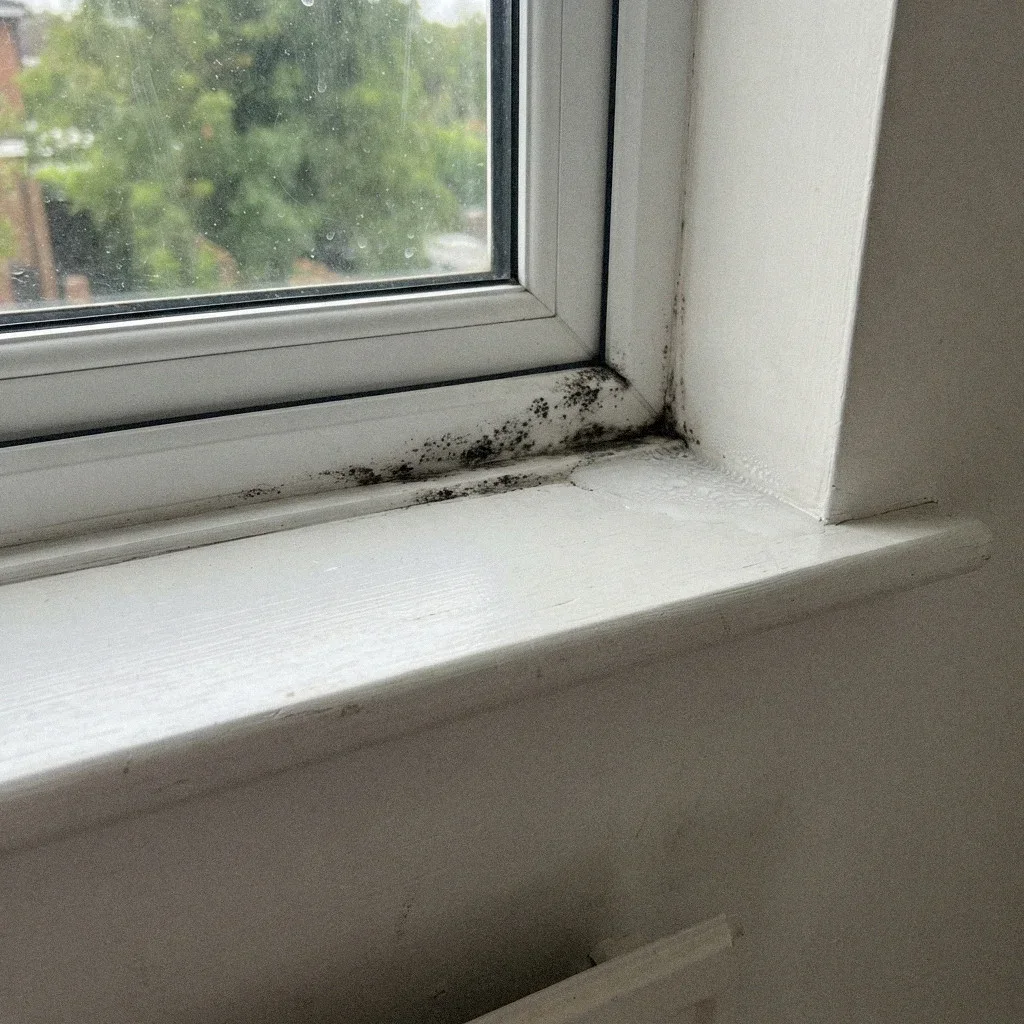
| Dark speckling along a cold wall | Dark speckling along a cold wall usually follows the isotherm where warm indoor air meets a chilled surface, most often an exterior wall backing a single-glazed aluminum window or a corner with little insulation. Condensation forms first, then spores colonize the film. Check for a matching pattern below a windowsill or in the corner of a north-facing room, and rule out efflorescence, the white or gray mineral crust that looks similar but brushes off dry. | Not an emergency, but worth tracking before it spreads across drywall or into a curtain. If the speckling stays confined to a small cold spot and the wall feels dry to the touch, address the condensation source first. If the area is damp, warped, or expanding, treat it as active moisture and bring in a licensed pro who checks the wall cavity, not just the surface. | Marine layer humidity |
| Black spots in shower grout | Black spots in shower grout are almost always surface mold feeding on soap film and skin cells in a space that stays wet after every shower, not a sign of a hidden leak. Compare that to a water stain spreading across a ceiling in San Diego, which points to a roof or plumbing source instead. Clean routinely; if spots return within days despite cleaning, ventilation is the real problem. | Low to moderate. Black spots confined to grout are usually surface mold feeding on soap film, not a structural moisture problem. It becomes urgent if you also see soft drywall, a swollen baseboard, or a stain spreading past the tile onto the ceiling, which points to a leak behind the wall rather than shower splash. | Ask on the call |
| White fuzzy growth in a closet | White fuzzy growth on a closet wall or shelf is almost always mold rather than mildew, feeding on dust and cardboard in a space that gets no air movement. Closets against an exterior wall in an older San Diego home often sit a few degrees cooler, which is enough for condensation. Confirm it isn't efflorescence, a mineral salt deposit that means water is moving through masonry, not organic growth. | Not an emergency, but don't ignore it. A closed closet door is the whole problem: no airflow, no light, and moisture with nowhere to go. Open the door, pull items off the floor, and find out why that wall stays damp before it spreads to the drywall or baseboard behind it. | Ask on the call |
| Condensation running down a window | Condensation forming on glass and dripping down means indoor air is meeting a cold surface, most often a single-glazed aluminum window common in older San Diego housing. The water itself does not cause growth; the sill, the drywall around it, and the curtain do, once they stay wet. Wipe the sill dry and watch the same spot over the next week. | Low by itself, but worth tracking. A window that runs every morning near the marine layer and fog off the coast is telling you the room stays humid, not that the house is failing. If the sill starts to discolor, the drywall softens, or the curtain edge shows spotting, move it up and have that specific area looked at. | Window condensation |
| Itchy eyes indoors only | Itchy eyes only indoors, easing outside or on weekends away from home, points to something airborne inside the house rather than allergies in general. Mold spores are one cause; dust and pet dander are others. It does not tell you the species or the location. Check for a musty odor or a ceiling stain nearby, then look for the moisture feeding it before treating the air. | Not an emergency by itself. Treat it as a prompt to inspect, not a reason to call anyone at night. If it comes with a musty odor, a water stain, or a room that stays damp, the moisture source behind it matters more than the eyes do, and that source is what actually needs finding in a San Diego house with old windows or a slow roof leak. | Ask on the call |
| Salty white crust on masonry | A white, powdery crust on brick, block or stucco is efflorescence: mineral salts left behind as water moves through masonry and evaporates at the surface. It is a moisture signal, not mold, and not a health hazard on its own. It tells you water is getting into a wall in San Diego, often near grade or a planter, and that path needs tracing before anything inside is treated. | Not urgent as a symptom itself, but treat it as a clue. If the same wall has a musty odor, peeling wallboard or a ceiling stain nearby, the water behind the salt crust may already be feeding growth indoors. Note where it appears and how often, then have the moisture source checked rather than scrubbing the crust away. | Crawl space ground moisture |
| Soot marks above a candle or fireplace | Soot is dry, black, and sits highest right above the flame — on the wall or ceiling over a candle or fireplace, not spreading outward into the room. That pattern rules out mold, which needs moisture and does not confine itself to a flame's path. Wipe a corner with a damp cloth; soot smears and lifts, mold does not. No water source, no remediation call needed. | Low. This is a cleaning task, not a moisture problem — no ceiling stain, no musty odor, no soft drywall nearby to suggest condensation or a leak. If black marks show up away from any flame, on a cool exterior wall or near a window, that is a different symptom and points to condensation or a hidden leak instead. | Roof leak |
| Old brown staining with no damp | Old brown staining with no damp is usually a water stain left behind after the source dried up, not active mold: a past roof or plumbing leak, or old condensation, that oxidized into a rust-colored or tea-colored mark and stopped moving. Check for softness or smell before assuming it is dead. | Low, if the drywall is firm, the color is not spreading, and there is no musty odor. Press the spot; soft or spongy board means water is still present and this belongs on the active leak path instead. Confirm dryness before painting over it. | Roof leak |
Frequently Asked Questions
What does it mean if I see musty smell in one room?
A musty odor with no visible stain often means hidden moisture: a slow leak inside a wall, condensation pooling on a single-glazed aluminum window frame, or an AC condensate line backing up above a ceiling. Check under sinks, along exterior walls, and near supply registers. If the smell is confined to one room, that room is where the water is entering.
What does it mean if I see dark speckling along a cold wall?
Dark speckling along a cold wall usually follows the isotherm where warm indoor air meets a chilled surface, most often an exterior wall backing a single-glazed aluminum window or a corner with little insulation. Condensation forms first, then spores colonize the film. Check for a matching pattern below a windowsill or in the corner of a north-facing room, and rule out efflorescence, the white or gray mineral crust that looks similar but brushes off dry.
What does it mean if I see bathroom ceiling that never dries?
A ceiling that stays damp signals a source feeding it faster than San Diego air can dry it: a bathroom fan missing or venting into the attic instead of outside, a slow leak from a flat roof above, or condensation off a poorly insulated line. Discoloration or bubbling paint often follows. Rule out efflorescence and old water staining before assuming active growth, then trace the moisture before touching the surface.
What does it mean if I see wallpaper lifting at a seam?
Wallpaper lifting at a seam means moisture is getting behind the paper, softening the paste. In San Diego that is often condensation off a single-glazed aluminum window nearby, or a slow leak inside the wall. Check for a musty odor or soft drywall under the seam. If the wall stays damp to the touch, treat it as an active leak, not a paper problem, and look at what feeds it before repapering.
What does it mean if I see paint bubbling or peeling on one wall?
Bubbling or peeling paint on one wall, without a matching spot on the ceiling, usually means moisture is moving through the wall itself rather than falling from above. In older San Diego bungalows and tract homes across North Park or Clairemont, that often traces to a plumbing leak inside the wall, condensation from a single-glazed aluminum window, or grade outside pushing water in. Peeling alone does not confirm mold is present.
What does it mean if I see stain that returns after painting?
Paint hides a stain once, but if the water source stays active the discoloration bleeds back through in weeks. This is not a paint failure; it means moisture is still reaching that ceiling or wall in San Diego, often from a flat roof, an AC condensate line, or plumbing behind the surface. Painting over it again just repeats the cycle. The fix starts with finding and stopping the water, not another coat.
What does it mean if I see cool damp patch on a wall?
A cool, damp patch on drywall usually means moisture is condensing or wicking through from behind — often a slow leak, poor insulation, or a cold surface meeting humid indoor air, common near single-glazed aluminum windows in older San Diego homes. Left alone, it feeds growth behind the wall. Don't confuse it with efflorescence, a dry, chalky mineral crust with no dampness. Check within a few days; find the moisture source before anyone treats the wall.
What does it mean if I see warped or cupped floorboards?
Warped or cupped floorboards mean water has reached the wood from below or from a spill left too long, and the boards are swelling unevenly. It usually points to slab moisture, a plumbing leak, or damp carpet nearby rather than airborne humidity. Check under the flooring before assuming the surface finish is the problem.
What does it mean if I see black spots in shower grout?
Black spots in shower grout are almost always surface mold feeding on soap film and skin cells in a space that stays wet after every shower, not a sign of a hidden leak. Compare that to a water stain spreading across a ceiling in San Diego, which points to a roof or plumbing source instead. Clean routinely; if spots return within days despite cleaning, ventilation is the real problem.
What does it mean if I see white fuzzy growth in a closet?
White fuzzy growth on a closet wall or shelf is almost always mold rather than mildew, feeding on dust and cardboard in a space that gets no air movement. Closets against an exterior wall in an older San Diego home often sit a few degrees cooler, which is enough for condensation. Confirm it isn't efflorescence, a mineral salt deposit that means water is moving through masonry, not organic growth.
Not sure what you're looking at
Not every stain, smell or symptom points to mold, and guessing wastes money. A ceiling mark under a flat roof near Kearny Mesa might be a pooling leak with no mold yet, while a musty smell in a closet near Golden Hill with no visible spot might already be active growth behind the baseboard. Matching the actual symptom to what usually causes it, room by room, narrows the question before anyone quotes a job, which is the only way a quote reflects the real work.
Call (619) 833-1053